


Understanding Industrial salt Prices
Market Overview & Supply Chain Dynamics
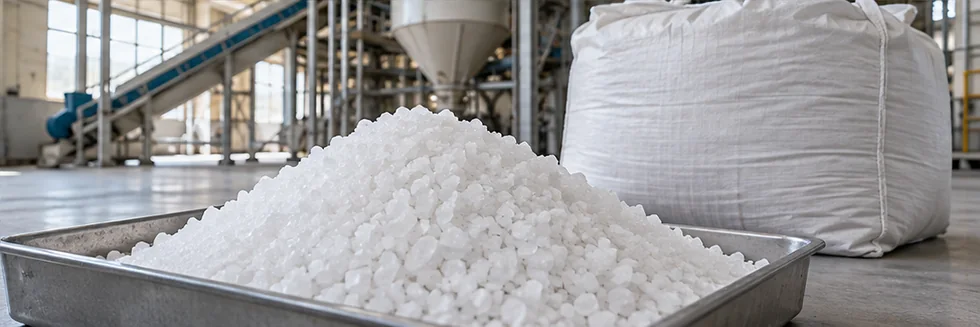
Industrial Salt is sodium chloride produced from rock deposits, brines, or evaporative systems. Calcium and magnesium, moisture, and crystal size distinguish commercial lots. Brine preparation for chlor-alkali production requires a different impurity assessment from broad deicing or general industrial uses. Mining, evaporation, washing, drying, and screening create separate cost structures, even when the principal salt chemistry is the same.
Key Applications & Industrial Demand
Chemical manufacture, chlor-alkali plants, water softening, textile processing, and other industrial operations consume suitable salt. Buyers select dissolving behavior, impurity limits, and delivery form for the process. Food-grade salt has a different intended-use and documentation basis from ordinary industrial material.
Key Factors Influencing Industrial Salt Price Movements
- Production Route: Mining depth, evaporation conditions, washing, drying energy, and plant scale influence the cost of available industrial sodium chloride.
- Brine Purity: Calcium and magnesium affect brine preparation and treatment costs, while other impurities can restrict salt from demanding chemical processes.
- Dry Usable Quantity: Moisture, crystal size, caking, packaging, and transport determine how much consistent salt reaches the customer and how efficiently it dissolves or flows.
How to Interpret Industrial Salt Pricing Data
Salt often trades per metric ton, but compare moisture, assay, impurities, and package. Bulk, big-bag, and tablet products have different processing and delivery costs. A low per-ton mine value may exclude washing, drying, inland freight, and the customer's brine-purification expense.
Further reading: USGS Salt Industry Information
Frequently Asked Questions About Industrial salt
What Drives Price Changes for Industrial Salt?
Energy, evaporation weather, mine output, chemical demand, and freight influence prices. Low unit value makes transport and regional supply especially important to delivered industrial salt.
How Do Quality or Specification Differences Affect Industrial Salt Pricing?
NaCl assay, calcium, magnesium, insolubles, moisture, crystal size, and caking matter. A clean appearance alone does not establish suitability for high-purity brine production.
Why Can Local Industrial Salt Prices Differ From Global Benchmarks?
Quarry or evaporation-site distance, bulk terminals, bagging, truck costs, duties, and local chemical consumption affect prices. Freight can exceed the salt's production value.