


Understanding Hybrid inverter Prices
Market Overview & Supply Chain Dynamics
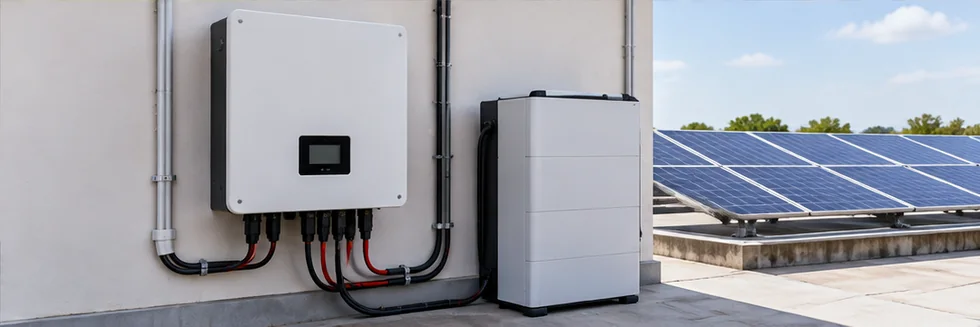
A Hybrid Inverter combines solar MPPT with bidirectional conversion for battery storage. Battery voltage and the communications protocol determine which batteries can be integrated safely and correctly. Backup output, where offered, may have a different power limit from normal grid operation. Solar-and-storage functionality therefore needs to be evaluated as an integrated electrical design rather than an inverter label alone.
Key Applications & Industrial Demand
Homes and commercial sites use hybrid equipment for solar self-consumption, controlled battery charging, and selected backup loads. The unit can simplify a new DC-coupled installation, while compatibility constraints matter when adding storage to an existing system.
Key Factors Influencing Hybrid Inverter Price Movements
- Storage Interface: Battery voltage, communications protocol, and bidirectional conversion capability determine compatible storage options and electronic complexity.
- Backup Architecture: Backup output rating, transfer arrangements, and supported phase configuration distinguish emergency-load capability from normal grid-connected power.
- Solar Integration: MPPT inputs, DC limits, monitoring, and approved system configurations influence installation flexibility and total equipment requirements.
How to Interpret Hybrid Inverter Pricing Data
Compare equipment prices at the same AC capacity, battery interface, and backup capability. Check included switching hardware, monitoring, approved battery list, and phase configuration. A hybrid inverter quotation usually excludes the battery's energy capacity and installation work.
Further reading: Australian Government: Hybrid Inverters
Frequently Asked Questions About Hybrid inverter
What drives price changes for Hybrid Inverter?
Power electronics, storage demand, battery-integration development, grid approvals, and model capabilities influence the price of hybrid equipment.
How do quality or specification differences affect Hybrid Inverter pricing?
Battery compatibility, AC rating, backup power, phase configuration, solar inputs, and switching equipment create materially different product capabilities.
Why can local Hybrid Inverter prices differ from global benchmarks?
Regional electrical approvals, import costs, approved battery combinations, installer commissioning, and warranty services change the delivered system cost.