


Understanding HDPE pipe grade Prices
Market Overview & Supply Chain Dynamics
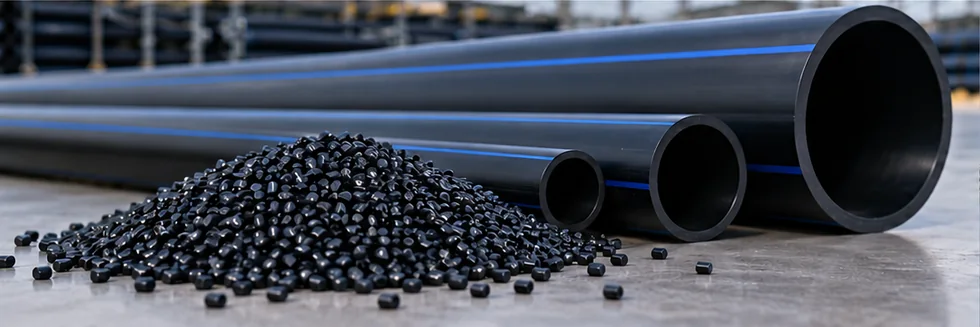
HDPE Pipe Grade is engineered for continuous extrusion and long service under mechanical stress. Slow crack growth, hydrostatic strength, melt flow, carbon-black dispersion, and pipe classification are central purchasing terms. Base resin and ready-compounded black material represent different supply stages. A pressure-pipe designation requires qualification; it cannot be inferred merely from density or a seller's general HDPE description.
Key Applications & Industrial Demand
Water networks, gas distribution, industrial fluid systems, mining, and irrigation consume different polyethylene pipe grades. Pressure, temperature, joining method, and exposure define requirements. Utilities often maintain approved material lists because long-term reliability matters more than a short resin-price saving.
Key Factors Influencing HDPE Pipe Grade Price Movements
- Long-Term Performance: Slow crack growth and hydrostatic strength requirements restrict suitable grades and create premiums for qualified pressure-pipe material.
- Extrusion and Stabilization: Melt flow, pellet consistency, and carbon-black dispersion influence pipe dimensions, processing stability, weather resistance, and the cost of rejected production.
- Infrastructure Procurement: Water and gas projects order to a pipe classification and approved specification, so tender timing can tighten qualified supply independently of packaging HDPE.
How to Interpret HDPE Pipe Grade Pricing Data
Pipe resin is commonly quoted per metric ton, while finished pipe may be per meter or piece. Compare qualified resin classifications and whether carbon black or other additives are already compounded. Extrusion scrap, testing, and qualification costs belong in any substitution assessment.
Further reading: ExxonMobil HDPE Extrusion and Pipe Grades
Frequently Asked Questions About HDPE pipe grade
What drives price changes for HDPE Pipe Grade?
Ethylene costs, infrastructure tenders, resin capacity, and approved-grade inventory influence prices. Pressure-pipe demand can follow project schedules rather than consumer-packaging cycles.
How do quality or specification differences affect HDPE Pipe Grade pricing?
Long-term strength class, crack resistance, stabilization, compound quality, and approvals matter. General-purpose HDPE is not automatically suitable for a pressure pipe.
Why can local HDPE Pipe Grade prices differ from global benchmarks?
Utility approvals, import duties, testing, compound availability, and freight affect local costs. A qualified regional grade may command more than unapproved export resin.