


Understanding DRAM memory chips Prices
Market Overview & Supply Chain Dynamics
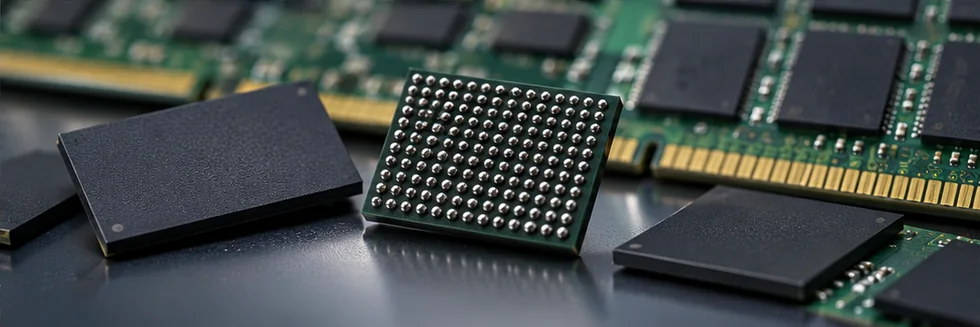
DRAM memory chips store working data in cells that require refresh and lose their contents when power is removed. Wafer fabrication, cell scaling, yield, testing, and packaging determine supply. DDR generation, density, latency, and package organization divide the market into distinct products. A high-capacity chip intended for a server memory channel cannot automatically replace a mobile or consumer device, even when both are sold under the DRAM label.
Key Applications & Industrial Demand
Computer manufacturers, server builders, graphics-card producers, and embedded-system designers purchase DRAM for temporary data storage. Artificial-intelligence servers and conventional PCs can compete for manufacturing investment, but demand for a specific memory interface still depends on its supported processor platforms and approved board designs.
Key Factors Influencing DRAM Memory Chips Price Movements
- Process Yield and Density: Higher density and tighter manufacturing geometries change output per wafer, while yield determines how much tested memory reaches commercial channels.
- Interface Transition: A DDR generation shift can tighten older chips or create new qualification demand; latency and package organization constrain substitution.
- Inventory Cycles: Server builds, PC shipments, customer inventories, and fabrication-capacity decisions determine whether buyers replenish aggressively or draw down existing stock.
How to Interpret DRAM Memory Chips Pricing Data
Chip prices are generally stated per device or contracted lot, while industry references may discuss dollars per gigabit. Convert bit capacity carefully before comparing these bases. Bare chips exclude module assembly, printed circuit boards, power-management components, heat spreaders, and module-level validation; those additions belong to finished-memory pricing.
Further reading: Micron: DRAM Components
Frequently Asked Questions About DRAM memory chips
What drives price changes for DRAM Memory Chips?
Wafer output, memory-maker capacity allocation, customer inventories, server deployment, and PC demand produce pronounced semiconductor inventory cycles.
How do quality or specification differences affect DRAM Memory Chips pricing?
DDR generation, density, speed bin, latency, operating temperature, and chip organization determine compatibility and commercial value.
Why can local DRAM Memory Chips prices differ from global benchmarks?
Spot inventories, distributor margins, tested traceability, order size, and freight separate locally available chips from large contract purchases.