


Understanding Buoy mooring fee Prices
Market Overview & Supply Chain Dynamics
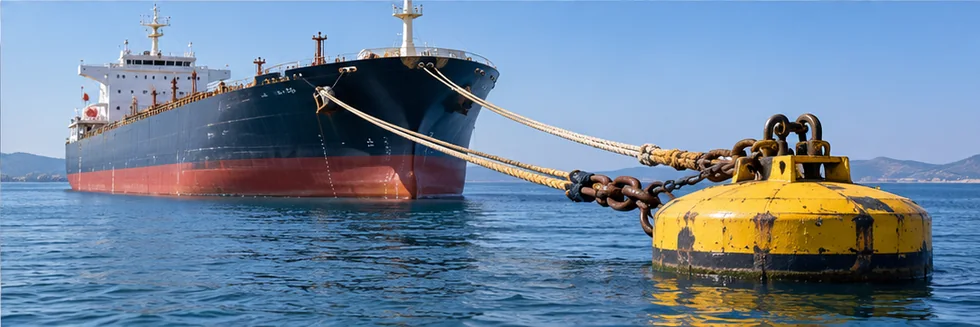
A buoy mooring fee covers access to a buoy berth or related mooring facility under its local conditions. Occupancy time, tonnage basis, mooring arrangement, and attendance determine the cost and practical scope. Buoys and dolphins can provide vessel positions without conventional quayside access. Their use must be distinguished from anchoring, berth rental, and the separate work of connecting or releasing mooring lines.
Key Applications & Industrial Demand
Tankers, bulk vessels, barges, and ships waiting or undertaking approved operations may use buoy facilities. Port agents and operators plan around permissible vessel dimensions, weather limits, service access, and occupancy. Demand is local because a particular mooring's geography and infrastructure cannot be replaced by a distant benchmark.
Key Factors Influencing Buoy Mooring Fee Price Movements
- Facility Allocation: Buoy berth location, permitted activity, vessel limits, and mooring arrangement determine which facility can serve the planned operation.
- Time and Vessel Basis: Occupancy time, tonnage basis, minimum periods, and rounding rules translate the tariff into a voyage-specific cost.
- Supporting Attendance: Attendance, launch work, line handling, inspection, and special operating conditions may add charges beyond the buoy-occupation fee.
How to Interpret Buoy Mooring Fee Pricing Data
Rotterdam's published port conditions distinguish buoy, dolphin, and public-quay dues. Read each amount with its defined vessel and time basis. Establish whether VAT, connecting labor, transport launches, and other port services are additional. Compare total planned occupation for the same vessel rather than simply the printed rate.
Further reading: Port of Rotterdam: Port Tariffs and Conditions
Frequently Asked Questions About Buoy mooring fee
What Drives Price Changes for Buoy Mooring Fee?
Tariff changes, occupied time, vessel category, facility selection, and supporting services drive changes in buoy-mooring costs.
How Do Quality or Specification Differences Affect Buoy Mooring Fee Pricing?
Mooring capacity, location, permitted operations, access, and included attendance determine whether two buoy facilities offer comparable use.
Why Can Local Buoy Mooring Fee Prices Differ From Global Benchmarks?
Local geography, mooring infrastructure, vessel limits, harbor policy, and service attendance create differences between buoy-mooring markets.