This is the latest available source quote. It has not been updated recently; the displayed quote time remains unchanged until a newer valid quote is available.
Price history
Each source has its own currency and unit · Sources may update at different intervals
water content: Moisture is a grade-specific specification.
Understanding Acetonitrile Prices
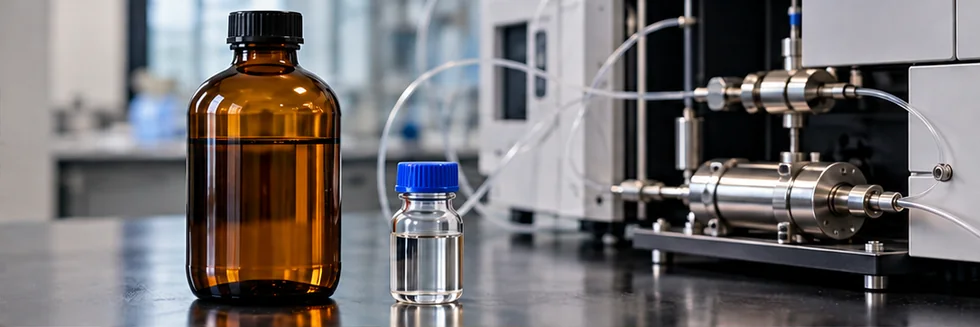
Illustrative image for the Acetonitrile market guide.
Market Overview & Supply Chain Dynamics
Acetonitrile is a polar aprotic solvent whose supply often begins as an acrylonitrile coproduct, followed by recovery and purification. This relationship means solvent output can change with a different chemical's economics. Technical material and HPLC grade serve separate customers: UV absorbance, water content, and trace contamination are central to analytical performance. Dedicated filling and clean containers preserve high-purity solvent after distillation.
Key Applications & Industrial Demand
Pharmaceutical synthesis, extraction, chromatography, and chemical laboratories consume acetonitrile. HPLC users value reproducible detector background and impurity control, while large process users focus on reaction performance and solvent recovery. Demand is therefore split between bulk manufacturing and smaller, highly qualified analytical purchases.
Coproduct Availability: Acrylonitrile coproduct output depends on upstream plant runs, so acetonitrile supply may tighten without a comparable change in its own demand.
Analytical Purification: HPLC grade requires low UV absorbance, tightly controlled water content, and impurity removal that ordinary industrial purification may not deliver.
Qualified Customer Demand: Pharmaceutical and laboratory customers can require specific polar aprotic solvent performance, clean packaging, and validated supply, limiting rapid substitution between commercial grades.
How to Interpret Acetonitrile Pricing Data
Acetonitrile can be quoted per kilogram or ton in industrial trade and per bottle in laboratory distribution. HPLC, gradient, and other analytical grades should be evaluated independently of technical solvent. Purity specifications and packaging cleanliness account for much of the difference in price.
Acrylonitrile operating rates, purification capacity, pharmaceutical consumption, and solvent inventories are key influences. Coproduct dependence can make availability unusually sensitive to upstream outages.
How do quality or specification differences affect Acetonitrile pricing?
HPLC and other analytical grades control UV background, water, particles, and trace contaminants. These requirements add value beyond a high overall chemical assay.
Why can local Acetonitrile prices differ from global benchmarks?
Local analytical distribution, clean packaging, import clearance, flammable-liquid freight, and qualified inventory affect prices. Laboratory bottles are a different cost structure from bulk process solvent.