


Understanding AAC bricks Prices
Market Overview & Supply Chain Dynamics
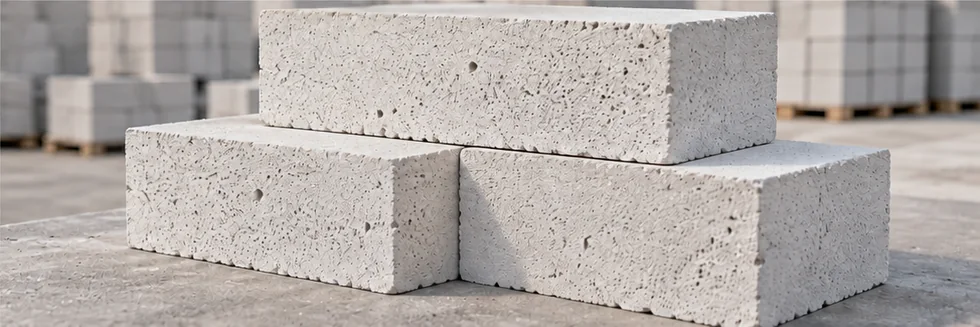
AAC Bricks are made by forming aerated pores in a mineral mixture and curing the units through autoclaving. Dry density, compressive strength, and dimensional accuracy distinguish grades. Cutting before steam curing creates consistent shapes, while the cellular structure reduces weight compared with many dense masonry units. A low-density block must still meet its intended wall and handling requirements.
Key Applications & Industrial Demand
Partitions, infill walls, and specified masonry systems use AAC blocks with appropriate structural and exposure qualification. Builders value lower handling weight and thermal performance. Compatible mortar, fixings, movement details, and finishing are important parts of a successful wall system.
Key Factors Influencing AAC Bricks Price Movements
- Autoclave Production: Mineral feedstocks, aeration control, autoclaving energy, and plant yield influence the cost of stable cellular units.
- Block Performance: Aerated pores, dry density, and compressive strength determine handling, thermal properties, and whether a block meets the wall specification.
- Wall Productivity: Dimensional accuracy, block size, thin-joint compatibility, cutting waste, and transport damage influence completed-wall costs beyond the purchase price per unit.
How to Interpret AAC Bricks Pricing Data
AAC may be priced per block or cubic meter. Align dimensions, density, strength, tolerances, and delivery damage terms. Mortar, render, reinforcing details, and labor are additional system costs, so piece prices alone do not compare completed wall area reliably.
Further reading: AAC Product Environmental and Technical Declaration
Frequently Asked Questions About AAC bricks
What Drives Price Changes for AAC Bricks?
Autoclave energy, mineral inputs, plant output, local construction, and freight influence prices. Project demand can tighten particular density and strength combinations.
How Do Quality or Specification Differences Affect AAC Bricks Pricing?
Density, strength, dimensions, moisture, shrinkage, and surface condition matter. A lighter block is not automatically the best choice for every wall or fixing requirement.
Why Can Local AAC Bricks Prices Differ From Global Benchmarks?
Plant distance, bulky freight, pallet handling, breakage, and local wall-system demand affect prices. Compatible mortar and finishing availability can also change total installed cost.