This is the latest available source quote. It has not been updated recently; the displayed quote time remains unchanged until a newer valid quote is available.
Price history
Each source has its own currency and unit · Sources may update at different intervals
Definition: Nominally10-millimeter glass thermally toughened for specified glazing applications.
Key Specifications and Terms:
thermal tempering: Heating and rapid cooling establish a stress profile.
surface compression: Compression increases resistance to selected loads.
fragmentation: Breakage behavior differs from annealed glass.
roller distortion: Heat treatment can change visual quality.
pre-treatment machining: Holes and edges must be prepared before tempering.
Understanding 10 mm tempered glass Prices
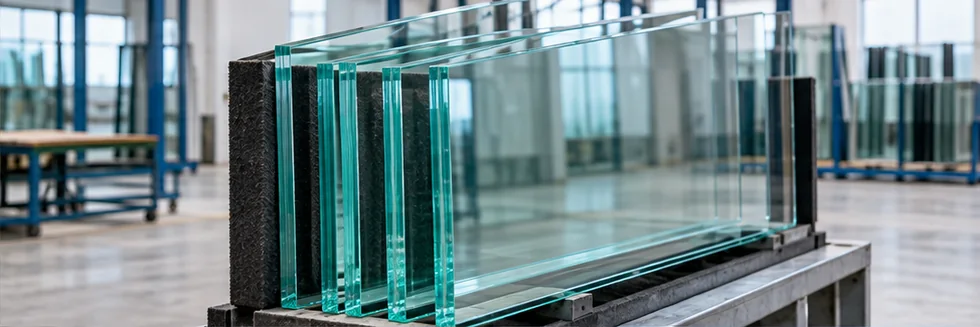
Illustrative image for the 10 mm Tempered Glass market guide.
Market Overview & Supply Chain Dynamics
10 mm Tempered Glass undergoes thermal tempering to create surface compression and altered fragmentation behavior. Roller distortion, pre-treatment machining, and dimensions affect the finished product's value. Cutting, drilling, and edge preparation are completed before heat treatment; the finished pane cannot simply be trimmed like annealed stock. Certification and installation design remain essential to determining acceptable glazing.
Key Applications & Industrial Demand
Partitions, doors, balustrade systems, furniture, facades, and other approved uses consume tempered glass. Some installations also require lamination or other measures beyond tempering. Buyers specify holes, notches, edges, coatings, visual quality, and applicable safety tests for the intended system.
Key Factors Influencing 10 mm Tempered Glass Price Movements
Pane Preparation: Pre-treatment machining, edge polishing, drilling, notches, and dimensions influence labor and rejection costs before a pane enters the tempering furnace.
Heat-Treatment Quality: Thermal tempering, surface compression, fragmentation, flatness, and roller distortion determine performance and visual acceptance.
Glazing Specification: Nominal thickness, coatings, heat-soak requirements, certification, packing, and project geometry distinguish custom safety-glass orders from ordinary flat stock.
How to Interpret 10 mm Tempered Glass Pricing Data
Prices are commonly per square meter of finished pane. Align10 mm thickness, size, holes, edges, coatings, tests, and delivery. A raw float-glass value excludes machining and tempering, while laminated safety systems include additional layers and fabrication.
Frequently Asked Questions About 10 mm tempered glass
What Drives Price Changes for 10 mm Tempered Glass?
Base-glass costs, furnace energy, machining, production yield, and project demand influence prices. Complex panes and short custom runs can carry substantial fabrication premiums.
How Do Quality or Specification Differences Affect 10 mm Tempered Glass Pricing?
Thickness, stress and fragmentation tests, edge work, distortion, holes, flatness, and certification matter. Tempering alone does not establish suitability for every safety-critical installation.
Why Can Local 10 mm Tempered Glass Prices Differ From Global Benchmarks?
Local processing capacity, fragile freight, custom dimensions, packing, duties, breakage risk, and installation schedules affect prices. Replacement panes can require a dedicated production run.